The Road Calls
Invention, Memory, and the Open Road: Saturday Morning Writing Prompt

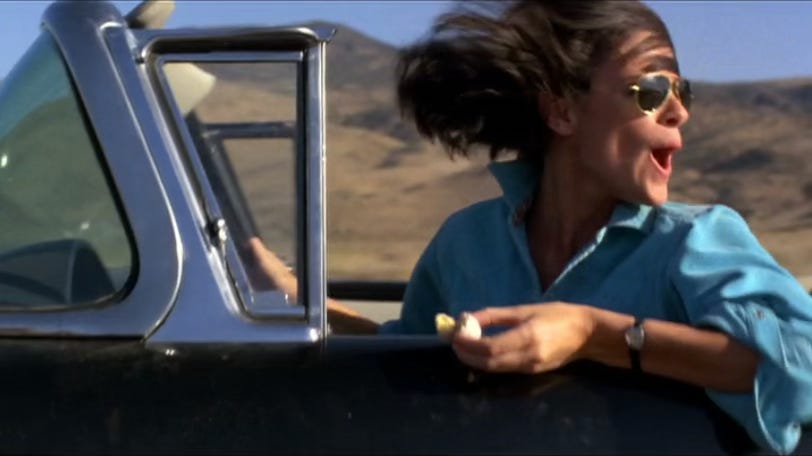
I dreamed I had the cutest little travel trailer—so I know it’s June and time to write about road trips.
Literary historians trace the road trip novel back to way before cars—from ancient wanderlust narratives to the Spanish picaresque, a genre pioneered in 1550s Spain by the seminal anonymous novel Lazarillo de Tormes, which follows the itinerant son of a sex worker navigating a corrupt world. Banned by the Inquisition for its social critique, it also inspired a whole new tradition of roguish, traveling protagonists surviving episodic journeys through a disintegrating society. Influential American road trip novels include Mark Twain’s Roughing It (1872) and Adventures of Huckleberry Finn(1884), Patricia Highsmith’s lesbian escape epic The Price of Salt (1952), Kerouac’s counterculture classic On the Road (1957), Octavia Butler’s dystopian Parable of the Sower (1993), Imogen Binnie’s trans cult classic Nevada (2013), and Jesmyn Ward’s trauma-confronting Sing, Unburied, Sing (2017). Influential road-trip films include Fonda and Hopper in Easy Rider (1969), the lesbian love story Desert Hearts (1985), the outlaw classic Thelma & Louise (1991), the radical family-in-a-van tale of Little Miss Sunshine (2006) . . . and so many more!
Common themes of road trip stories include freedom and transformation, protagonist vs. corrupt world / protagonist vs. conformity, place as identity, the body as vulnerability, identity in motion, and the destination-focused “journey to” odyssey.
Let’s get started with 15 minutes of writing.
